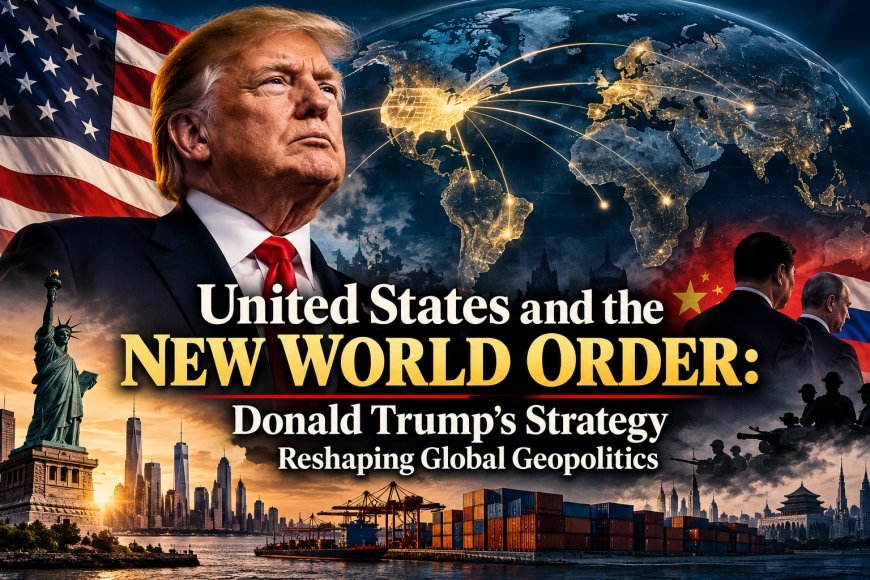
United States and the New World Order: Donald Trump's Strategy Reshaping Global Geopolitics
Discover how Donald Trump's strategy is reshaping the world order, international alliances, and the balance of power between the United States, China, Russia, and Europe.

For decades, the United States has been one of the leading forces shaping the rules, alliances, and balance of power that define the international system. Its influence extends from the global economy and international trade to military security, multilateral institutions, and the conflicts that have shaped contemporary history.
However, Donald Trump's return to the center of American politics has intensified a transformation that raises fundamental questions: Is Washington abandoning the world order it helped create, or is it attempting to reorganize that system to preserve its global dominance?
Tensions with Iran, pressure on Venezuela, disputes surrounding Greenland, the future of Ukraine, and strategic competition with China reflect a foreign policy that increasingly prioritizes national interests, military power, and economic leverage.
At first glance, these decisions may appear contradictory. The United States pressures its allies, challenges international agreements, threatens tariffs, and simultaneously maintains an extensive network of military installations around the world.
Nevertheless, several recognizable strategic objectives can be identified behind many of these actions: strengthening American influence in the Western Hemisphere, demanding greater European responsibility for its own defense, and containing China's rise in the Indo-Pacific.
1. The Origins of the US-Led World Order
Understanding current American foreign policy requires looking back to the end of World War II.
In 1945, Europe lay devastated, many economies required reconstruction, and the international balance of power had changed dramatically. The United States had emerged as an extraordinary economic and military power, while the Soviet Union consolidated its influence over Eastern Europe.
In this context, a new international system began to take shape. Its objectives included reducing the risk of another major war, encouraging economic cooperation, and creating permanent mechanisms for international negotiation.
The establishment of the United Nations, the development of international financial institutions, and agreements designed to encourage global trade formed part of this architecture. Later, military alliances such as the North Atlantic Treaty Organization, or NATO, strengthened Washington's strategic position.
This system is commonly described as the liberal international order, although its operation has always been influenced by differences in power between states.
Its principles include national sovereignty, international cooperation, the peaceful settlement of disputes, and rules governing the use of force. However, these principles have never been applied consistently in every situation.
The United States has promoted international institutions and rules while also conducting military interventions abroad and making decisions that have generated significant legal and political controversy.
The 2003 invasion of Iraq, justified by Washington through security arguments and claims about weapons of mass destruction, remains one of the most debated examples of this contradiction.
The US-led world order was therefore never a perfect or entirely neutral system. It combined international institutions, economic interests, military alliances, and a substantial imbalance of power.
2. From American Leadership to the America First Policy
During the Cold War, rivalry between Washington and Moscow shaped much of international politics. Both powers competed for military, economic, technological, and ideological influence.
The collapse of the Soviet Union in 1991 transformed that balance. The United States found itself in a position of military and economic superiority without an immediate equivalent competitor.
Over the following decades, Washington expanded its influence through alliances, military interventions, trade agreements, and diplomatic initiatives.
However, the wars in Iraq and Afghanistan, the 2008 financial crisis, industrial decline in certain American regions, and China's rise fueled domestic debate over the costs of global leadership.
Against this background, a political movement gained strength by questioning whether the United States should continue assuming the principal responsibility for guaranteeing international security.
Donald Trump made this perspective a central element of his political message through the slogan America First.
The underlying principle is straightforward: the US government should evaluate its international commitments according to the concrete benefits they provide to the country's economy, security, and negotiating power.
From this perspective, an alliance should not be maintained solely because of historical ties or shared ideology. It must demonstrate that it continues to serve American interests.
The difficulty emerges when this approach is applied unilaterally. If allies cannot predict whether Washington will honor its commitments during a crisis, they may develop independent defense capabilities, seek new partners, or reduce their dependence on the United States.
A strategy designed to strengthen American negotiating power could therefore weaken the relationships that have historically supported US global influence.
3. The Monroe Doctrine and the Struggle for Influence in the Western Hemisphere
One of the most significant elements of Trump's foreign policy is the renewed emphasis on traditional American influence throughout the Americas.
The Monroe Doctrine was announced in 1823 by President James Monroe. Originally, it warned European powers against further intervention and colonization in the American continents.
Over time, different US administrations reinterpreted the doctrine, turning it into a reference point for a much broader American role in the Western Hemisphere.
Today, competition with China and Russia has once again placed Latin America and the Caribbean at the center of Washington's strategic calculations.
In recent years, Beijing has expanded its trade relationships, infrastructure investments, and diplomatic ties with Latin American countries. Russia has also maintained political, military, and economic relationships with certain governments in the region.
From Washington's perspective, the presence of rival powers near American territory can raise concerns about national security, access to strategic resources, and the possibility that economic relationships could eventually create military leverage.
However, protecting legitimate security interests is not the same as expecting Latin American countries to automatically align themselves with Washington.
Latin American nations have their own economic needs, political priorities, and international interests, which do not always coincide with those of the United States.
Venezuela: Oil, Regional Influence, and Security
Venezuela occupies an important position in this geopolitical landscape because of its vast oil reserves, geographic location, and international relationships.
The country sits at the intersection of energy security, great-power competition, and disputes over political legitimacy and national sovereignty.
American pressure on Caracas must be understood within this broader context. Economic measures, sanctions, security operations, and diplomatic negotiations can serve different objectives, although they frequently overlap.
Beyond any individual event, the strategic significance is clear: Venezuela combines energy resources, political influence, and relationships with countries Washington considers strategic competitors.
Nevertheless, converting influence into lasting control is far more complicated than applying military or economic pressure. Political stability, public opinion, and the reactions of neighboring countries can determine the outcome of American initiatives.
Greenland: The Geopolitical Importance of the Arctic
Greenland illustrates how natural resources and geographic position can become extraordinarily important in international competition.
Its location between North America and Europe makes it relevant to military surveillance, Arctic shipping routes, and early-warning systems.
Climate change is also altering navigation conditions in the Arctic, increasing interest in the region's mineral resources and potential commercial routes.
For the United States, strengthening its position in this region could help limit strategic opportunities for Russia and China.
However, Greenland is part of the Kingdom of Denmark and has its own political framework. Attempts to impose territorial changes without the appropriate consent would conflict with principles of sovereignty and self-determination.
This case demonstrates that geopolitical power depends on more than military resources. It also requires legitimacy, political agreements, and the ability to maintain stable relationships with partners.
4. The American Military Network: A Strategic Advantage
American global influence cannot be explained solely by the size of its economy or its technological capabilities. A fundamental part of US power comes from its international military infrastructure.
Washington maintains military installations, access agreements, and personnel deployments across numerous countries. This network allows American forces to move troops, supply operations, monitor strategic regions, and respond rapidly to international crises.
Estimates of the number of US military facilities vary according to the definition used. Some counts include only officially recognized bases, while others incorporate shared facilities, access locations, and additional military sites.
The important factor is the strategic advantage this infrastructure provides.
In Europe, the American military presence contributes to deterrence against Russia and supports NATO's defense structure.
In the Indo-Pacific, agreements with Japan, South Korea, Australia, and other partners facilitate operations intended to maintain a balance of power in the face of China's growing capabilities.
In the Middle East, military installations and security agreements help monitor energy routes, support military operations, and respond to regional threats.
This infrastructure is reinforced by aircraft carrier strike groups, submarines, strategic bombers, intelligence capabilities, and logistical systems that enable the United States to project military power across great distances.
Maintaining this network, however, comes at a substantial cost. It requires significant budgets, specialized personnel, continuous maintenance, and stable political relationships with host countries.
America's global military presence is therefore both one of its greatest advantages and one of its most demanding strategic responsibilities.
5. Iran and the Risk of a War With Unpredictable Consequences
The Middle East remains central to American foreign policy because of its energy resources, geographic position, and the rivalries between regional actors.
Iran occupies a pivotal position because of its nuclear program, military capabilities, regional influence, and relationships with various groups and governments.
For years, Washington and Tehran have alternated between confrontation and attempts at negotiation. Economic sanctions, disputes over the nuclear program, and direct or indirect clashes have made a stable relationship difficult to achieve.
A military operation against Iran could seek to weaken specific military capabilities, increase negotiating pressure, or reduce the Iranian government's ability to respond to American objectives.
However, the consequences of a large-scale intervention would be difficult to control.
Iran has the capacity to respond through missiles, drones, and other military capabilities. Any escalation could also affect maritime routes, increase energy transportation costs, and destabilize neighboring countries.
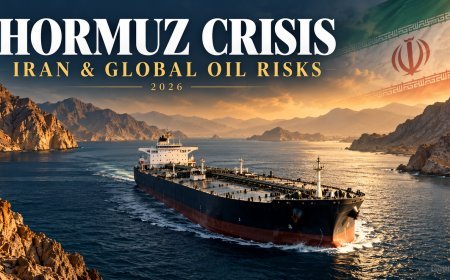
The Strait of Hormuz deserves particular attention because it is a vital route for global oil shipments. A prolonged disruption could push energy prices higher and affect both developed economies and countries dependent on imported energy.
There is also a political risk: military operations may temporarily weaken an adversary without producing a lasting political transformation.
The experiences of Iraq and Afghanistan demonstrate that military superiority alone does not guarantee the establishment of a stable political order.
Any assessment of a confrontation with Iran must therefore distinguish between the immediate objectives of a military operation, its battlefield results, and its long-term strategic consequences.
6. Europe and NATO: An Alliance Under Pressure
The relationship between the United States and Europe is one of the traditional pillars of the international order established after 1945.
NATO provides a collective defense framework under which members regard an attack against one ally as a matter of concern for the entire alliance. American participation has been fundamental to the credibility of this arrangement.
However, Washington's demands for European allies to increase defense spending are not new. Different American presidents have questioned the distribution of military costs within the alliance for decades.
The difference lies in the degree of uncertainty created when international commitments are presented as agreements subject to continuous reassessment according to immediate benefits.
If European governments conclude that they cannot fully rely on the United States during a crisis, they will have stronger incentives to invest in their own military capabilities.
This could include weapons production, air defense systems, intelligence, logistics, and greater coordination among European armed forces.
From a strategic perspective, a Europe with stronger military capabilities could reduce the American burden. However, if this process develops without coordination, it could also produce duplication, political tensions, and difficulties in organizing a common response.
The war in Ukraine reinforces these concerns. European countries must balance the need to deter Russia against the risks of military escalation and uncertainty over the duration of American support.
The future of the alliance will depend largely on whether both sides can transform their disagreements into a clearer and more sustainable distribution of responsibilities.
7. Russia and Ukraine: Pragmatic Diplomacy or a Weakened West?
The war in Ukraine represents one of the most important tests for Europe's security system.
Since Russia's full-scale invasion began in February 2022, Ukraine has received military, economic, and diplomatic assistance from numerous Western countries. The United States has played a prominent role in that support.
However, Trump's return to power has intensified debate over the terms of a potential settlement and the costs Washington is willing to bear to support Kyiv.
From a pragmatic perspective, negotiating with Russia can be viewed as a means of shortening the war, limiting economic costs, and reducing the risk of a broader confrontation.
Diplomacy does not require agreement with an adversary's objectives. Negotiating with a rival government may be essential to achieving verifiable agreements.
The problem arises when negotiations take place without Ukraine's effective participation or without addressing its long-term security needs.
An agreement that temporarily stops the fighting but leaves the conditions for renewed aggression in place could provide immediate stability without resolving the underlying causes of the conflict.
There is also an important international precedent at stake. If borders can be changed through the use of force without meaningful consequences, other governments may conclude that military pressure is an effective instrument for achieving territorial objectives.
The challenge is to balance the need for negotiations with the protection of Ukrainian sovereignty and the creation of mechanisms that reduce the likelihood of another war.
8. China: Washington's Greatest Long-Term Strategic Challenge
Although conflicts in the Middle East and Europe receive considerable international attention, China remains one of the most important challenges to America's global position.
Unlike many other competitors, China combines a massive economy, an advanced industrial base, technological capabilities, extensive trade influence, and growing military power.
Its international expansion does not depend exclusively on its armed forces. It also relies on trade, investment, supply chains, diplomacy, and the development of strategic industries.
For Washington, this combination creates a long-term competition that demands considerable resources.
The Indo-Pacific is central to this rivalry. The region contains major maritime routes, technological manufacturing centers, and economies that are essential to international trade.
Taiwan is one of the most sensitive flashpoints. Its geographic position and importance in advanced semiconductor manufacturing increase the potential economic and military consequences of any crisis.
The United States maintains security relationships with regional partners and develops capabilities intended to deter potential Chinese military action. At the same time, Washington seeks to manage commercial ties with Beijing to prevent strategic competition from becoming an economically damaging rupture.
The contradiction in American policy is that Washington seeks to limit China's strategic growth while continuing to depend, to varying degrees, on economic relations with the Asian economy.
A policy based exclusively on confrontation could increase costs for American companies, disrupt supply chains, and accelerate the creation of alternative commercial networks.
Conversely, a negotiation perceived as excessively favorable to Beijing could concern American allies and weaken confidence in Washington's security commitments.
The challenge is to combine military deterrence, technological competition, trade negotiations, and selective cooperation on global issues.
9. Is There a Strategy Behind Trump's Decisions?
Despite their apparent contradictions, a common logic can be identified in many of the administration's strategic priorities.
First, Washington seeks to strengthen its influence in the Western Hemisphere and limit the strategic presence of rival powers in the Americas.
Second, it wants Europe to assume a greater share of the costs associated with its defense, reducing the need for the United States to concentrate so many resources on the European continent.
Third, the Indo-Pacific remains a decisive region for containing risks associated with China's military and technological rise.
Finally, Washington seeks to use economic, diplomatic, and military instruments as leverage to obtain concessions in international negotiations.
These priorities suggest an effort to concentrate resources and renegotiate international commitments.
However, identifying broad objectives does not mean that every decision is coherent or mutually reinforcing.
A strategy requires clear priorities, careful cost calculations, risk assessments, and achievable outcomes. If an administration opens too many fronts simultaneously, it may spread its resources too thinly to accomplish its principal goals.
Pressuring allies can produce immediate negotiating advantages but may also encourage them to develop independent alternatives. Threatening an adversary may secure concessions, but it can also strengthen that country's incentives to prepare for confrontation.
The central contradiction is that the United States needs cooperation from other countries to maintain its global influence, while an excessively unilateral foreign policy can undermine that very cooperation.
Trump's strategy should therefore be evaluated not only by its ability to produce short-term results but also by its impact on alliances, international stability, and America's relative position over the coming decades.
10. Middle Powers and the Emergence of a More Fragmented World
The transformation of the international order affects more than the great powers. It also changes the options available to countries seeking to protect their interests without becoming entirely dependent on Washington, Beijing, or Moscow.
Middle powers such as India, Brazil, and Turkey, along with other regional actors, can use international competition to diversify their economic and diplomatic relationships.
Rather than permanently aligning with a single bloc, these countries can establish different agreements according to their energy, trade, technology, and security needs.
This approach, often described as strategic autonomy or multi-alignment, can expand their negotiating options.
However, it also has limitations. Diversification requires economic resources, diplomatic capacity, and sufficiently balanced relationships with partners whose interests may be incompatible.
For Latin America, this environment presents both opportunities and risks.
The region can attract investment in critical minerals, energy, infrastructure, agriculture, and technology. It can also negotiate better trade conditions if it avoids excessive dependence on a single market.
However, competition among great powers can increase pressure to choose technology providers, diplomatic positions, and strategic partners.
Latin American countries will need to determine how to take advantage of these opportunities without sacrificing sovereignty or unnecessarily compromising economic stability.
The result could be an international system less organized around a single dominant power and increasingly shaped by shifting coalitions, regional agreements, and issue-specific negotiations.
11. What Does the New World Order Mean for the Global Economy?
Geopolitics and economics are becoming increasingly interconnected. Decisions involving tariffs, sanctions, investment, shipping routes, and energy security can change production and distribution costs worldwide.
If major economies intensify their trade disputes, companies may be forced to relocate factories, diversify suppliers, or maintain more expensive inventories.
Competition over semiconductors, critical minerals, energy, and strategic technologies may also increase government intervention in industries once considered primarily commercial.
Military conflicts create additional risks. An escalation in the Middle East could affect hydrocarbon transportation, while a crisis around the Taiwan Strait could have profound consequences for the global electronics industry.
Economic sanctions can restrict certain countries' access to financing, technology, and international markets. However, their effectiveness depends on cooperation among the countries imposing them and on the targeted country's ability to find alternatives.
For small, open economies, uncertainty can be particularly damaging. Changes in energy prices, logistics costs, and financing conditions can quickly affect inflation, economic growth, and employment.
International stability is therefore not an abstract concern. It has direct consequences for everyday life, business opportunities, and governments' ability to plan economic policy.
Conclusion: American Power Is Changing, but the Future Remains Uncertain
The world order is undergoing a profound transformation. Competition between the United States and China, the war in Ukraine, tensions in the Middle East, and disputes over traditional alliances reflect an international system under increasing pressure.
Donald Trump represents a vision that prioritizes national interests, negotiations from positions of strength, and a reassessment of American international commitments.
This approach did not emerge in a vacuum. It reflects domestic debates over the costs of global leadership, China's rise, the distribution of military responsibilities, and the perception that some competitors have used international structures to expand their influence.
However, the ability to impose conditions does not necessarily translate into the ability to build a stable international order.
The United States retains important military, technological, financial, and diplomatic advantages. Yet its influence also depends on the confidence of its allies, the strength of its institutions, and other countries' willingness to cooperate with Washington.
If American foreign policy succeeds in concentrating resources without destroying its fundamental alliances, it could strengthen certain strategic positions. If it instead generates widespread distrust, encourages closer cooperation among its rivals, and weakens the rules that protect states, the result could be a long-term decline in American influence.
The world is not inevitably heading toward a system dominated by China or a rigid division into opposing blocs. Several intermediate scenarios remain possible, ranging from managed competition between great powers to the increasing fragmentation of international institutions.
What appears increasingly clear is that the era of relatively uncontested American predominance has given way to a more complex competition in which military power, technology, natural resources, trade, and diplomacy are closely interconnected.
The fundamental question is no longer simply who will dominate the world, but which rules will prevail, who will have the power to establish them, and how much room for independent decision-making will remain for countries outside the group of great powers.
The new world order has not yet been defined. Its future will depend on the decisions made by the United States, China, Russia, Europe, and middle powers, as well as their ability to prevent strategic competition from turning into a conflict with global consequences.
In geopolitics, greater power creates the ability to influence the system; using that power wisely determines whether that influence can endure.
What's Your Reaction?
 Like
0
 Dislike
0
 Love
0
 Funny
0
 Angry
0
 Sad
0
 Wow
0